

When your mind won’t quiet, sound does the work.
What is Sound Therapy
A non-invasive, immersive experience using structured sound to support deep relaxation and nervous system regulation. Participants simply rest and receive while vibrations are delivered around them.

What to Expect
Duration: 60 mins
Simply rest comfortably while sounds fill the room.
1.) Find a comfortable position to rest on a mat.
2.) Rest with eyes open or closed.
3.) The session naturally comes to a gentle close
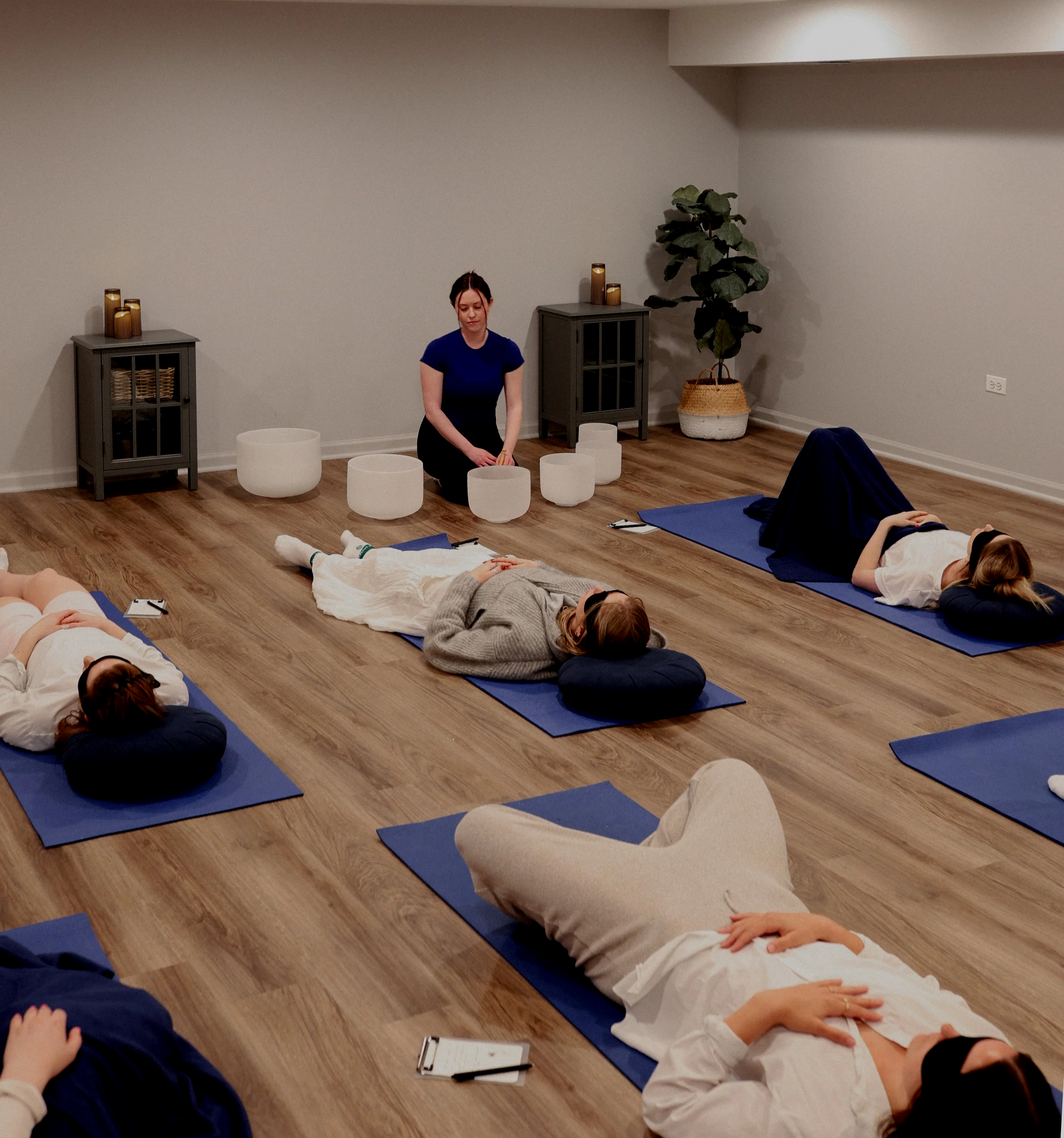
Nervous System Regulation
For the body
A calm state that can feel like..
Ease in falling and staying asleep
Muscle tension softening
Less of that “tired but wired” feeling
Being “reset”
Recommended for those with chronic illnesses or undergoing medical treatment (such as chemotherapy or radiation)
For the mind
A calm state that makes room for…
A break from the constant mental noise
Leaving work at work
Rest without feeling like you should be doing something
Less need to fill moments with your phone or other distractions
Deeper sense of presence
Sound therapy works by creating the right vibrational and sensory conditions to support the nervous system’s natural process of downregulation

Vibration
The body responds to the rhythms of sound waves through sensory and nervous system pathways, shaping internal experience
Each vibration repeats at a measurable rate called frequency.
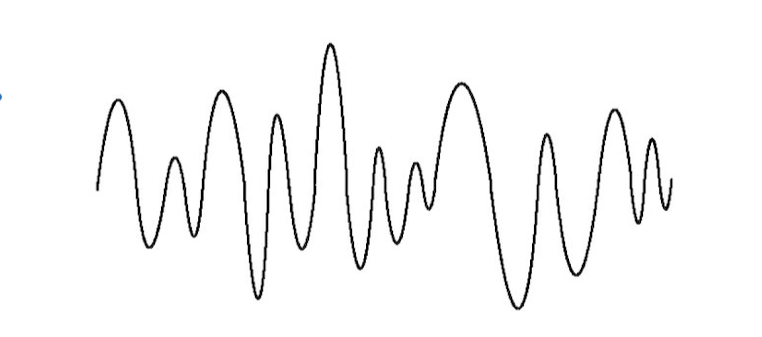
Frequency
How fast a vibration repeats, which determines perceived pitch.
Sound waves also vary in amplitude or intensity, which shapes how strongly the vibration is experienced.

Amplitude
The intensity or strength of a vibration - often experienced as changes in volume or perceived loudness.
Gradual increases and decreases in amplitude influence how sensory input is received, which may support smoother shifts in nervous system state and set the conditions for resonance to potentially occur.

Resonance
Resonance occurs when one vibrating system influences another with similar properties — allowing energy to transfer and causing the second system to begin vibrating more strongly.
In sound-based practices, the idea that externally generated acoustic waves may interact with biological tissues through similar alignment remains theoretical and is not yet understood in human research.
Sound therapy meets the nervous system exactly where it is, providing whatever support is needed most in that moment.
Consistency builds regulation over time.